
“For the strength of the pack is the wolf, and the strength of the wolf is the pack.”
~Rudyard Kipling
What exactly did Kipling mean when he said this? And, what can we…humans, learn from these beautiful creatures of the wild?
Twyman Towery spent many years in research, seeking the answers to this question. And the result of his book will make you think…what could human organizations accomplish if they lived by these principles?
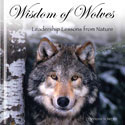 Excerpt from:
Wisdom of Wolves,
by Twyman Towery
No other mammal shows more spirited devotion to its family, organization or social group than the wolf. The members of the wolf pack hunt together to ensure survival of the group, but they also play, sing, sleep, scuffle and protect each other. A wolf’s purpose for existing is to insure the survival of the pack.
A wolf pack is made up of parents, aunts, uncles, brothers, sisters, half brothers and half sisters – it is truly an extended family organization. And though generally only the Alpha male and Alpha female produce pups, every member of the pack participates in the nurturing and education of the young. Each pack member assumes responsibility for the food, shelter, training, protection and play where the pups are concerned, for the pack realizes that the young are their future.
The loyalty exhibited between wolves is well-known and documented. But a Montana man who has used his summers for years to study wolves in Alaska gave me a different view of wolf loyalty. He told about a couple he knew who lived in an extremely remote area with their two sons in a log cabin they had made by hand. This family also included two wolves they had raised from earliest puppyhood, rescuing them from their den after their mother had been indiscriminately shot and the pups left to die. This was the only family the wolves had ever known, having only lived with humans as their pack mates.
One day the parents were cutting wood about a mile from home when one of the boys accidentally turned over a kerosene lamp (there was no electricity), and a raging fire began to consume the wooden structure. The two wolves immediately dashed toward the flaming cabin where the two boys were trapped inside, immobilized by smoke and fear. The parents were far behind, so the wolves gnawed and fought their way into the cabin and pulled the boys outside to safety. Though both wolves were badly burned, their loyalty to their “pack” meant the difference between life and death for these two members of their “pack.”
The Wolf Credo written by Del Goetz truly captures what the wolf is all about:
Respect the elders
Teach the young
Cooperate with the pack.
Play when you can
Hunt when you must
Rest in between.
Share your affections
Voice your feelings
Leave your mark.
This article was brought to you by “Simple Truths <simpletruths@news.simpletruths.com>”
 Mzsunflower's Say What?
Thought provoking and very nice.
Thank you Eric.