Hello Fear
Before you sit down there’s something I need to explain
Since you’re here
I think I should tell you since we last talked things have changed
See I’m tired of being broken-hearted
So I made a list and you’re on it
All my hopes and my dreams You took from me
I want those back before you leave
Hello Fear
I knew I would see you, You have a hard time letting go
See these tears, Take a good look cuz, soon they won’t fall anymore
God’s healing my hurtful places
That seat that was yours now is taken
I’m no longer afraid, See I’m better this way
And one more thing before you leave
(Chorus)
Never again will I love you
My heart it refuses to be your home
No longer your prisoner
Today I remember
Apart from you is where I belong
And never again will I trust you
I’m tired of fighting it’s been way too long
No longer your prisoner
Today I remember
Who I was and now it’s gone
They’re gone
Hello Grace
It feels like forever, I thought my chance with you was gone
See your face, it reminds me of mercy
And please let me say I was wrong
Never knew your touch was endless
How you never run dry of forgiveness
Didn’t know how bad it was, was afraid just because
Sorry fear, grace took your place
I hope you realize that you are not as different from other people as you may feel. As a psychologist, I have the unique opportunity to listen in as people share their private battles. Although we often fight these battles in the lonely spaces of our own minds, we might be surprised to learn just how common our experience really is. This brief passage captures it so well.
Autobiography in Five Short Chapters by Portia Nelson
I – I walk down the street.
There is a deep hole in the sidewalk.
I fall in
I am lost…I am helpless
It isn’t my fault.
It takes forever to find a way out.
II – I walk down the same street.
There is a deep hole in the sidewalk.
I pretend I don’t see it.
I fall in again.
I can’t believe I am in the same place.
But, it isn’t my fault.
It still takes a long time to get out.
III – I walk down the same street.
There is a deep hole in the sidewalk.
I see it is there.
I still fall in…it’s a habit.
My eyes are open.
I know where I am.
It is my fault.
I get out immediately.
IV – I walk down the same street.
There is a deep hole in the sidewalk.
I walk around it.
V – I walk down another street.
Which chapter are you on? ~ Paul H. Jenkins, Ph.D.
Are you simply moving through your day, without fully living?
I did this for many years. It was as if life were just passing by, and I was waiting for something to happen. I always felt like I was preparing for something later.
But today isn’t preparation for tomorrow. Today’s the main event.
Fully live today by being mindful. I realize this is easier said than done — mindfulness is a habit that’s not easily picked up. And so I’ve decided to share with you some of my favorite mindfulness rituals to help you appreciate every moment.
You don’t need to do all of these, but give a few of them a try to see if they make your day better.
Mindfulness Rituals
Ritual isn’t about doing a routine mindlessly. It’s a way of building something good into your life, so that you don’t forget what’s important. Done mindfully, a ritual can remind you to be conscious. Done mindlessly, a ritual is meaningless.
Here are a few of my favorites:
1. Sit in the morning. When you wake up, in the quiet of the morning, perhaps as your coffee is brewing, get a small cushion and sit on the floor. I will often use this opportunity to stretch, as I am very inflexible. I feel every muscle in my body, and it is like I am slowly awakening to the day. I’ll also just sit, and focus on my breathing going in and out. I’m an absolute beginner when it comes to meditation, but this always starts my day right.
2. Brush your teeth. I assume we all brush our teeth, but often we do it while thinking of other things. Try fully concentrating on the action of brushing, on each stroke of each tooth, going from one side of the mouth to the other. You end up doing a better job, and it helps you realize how much we do on autopilot.
3. Eat mindfully. Turn off the TV, put away the computer and mobile devices, even put away the book or newspaper. If you eat with any of these things (most people do), eating without them will seem boring. And yet, unless you do this, you are not truly appreciating your food. I like eating my oats (with nuts and berries — see my diet) mindfully, paying attention to each bite. It makes the food taste better, and I eat slowly and with gratefulness.
4. Wash your bowl. When you’re done eating, wash your dish immediately. Do it while paying full attention to your washing, to the water and suds. Read more.
5. Drink tea. There’s something ancient about the tea ceremony — and when you drink tea as a mindfulness ritual, you’re connecting with millions of others who have done so over the centuries. Make your own tea ceremony — prepare the tea carefully and mindfully, pour it slowly, sip it with thoughtfulness. See if you can set aside one time each day to do this, and it will transform your day.
6. Walk slowly. I like to take breaks from work, and go outside for a little walk. Walk slowly, each step a practice in awareness. Pay attention to your breathing, to everything around you, to the sounds and light and texture of objects.
7. Read in silence. Find a quiet time (mornings or evenings are great for me), and a quiet spot, and read a good novel. Have no television or computers on nearby, and just immerse yourself in the world of the novel. It might seem contradictory to let your mind move from the present into the time of the novel, but it’s a great practice in focus. Also, I love a good novel more than almost anything else.
8. Look at someone gratefully. Each day, find someone you care about. Instead of just seeing what you always see, really look at the person. Try not to do it creepily. See this person for the miracle that she is, and be grateful for her existence. If you’re feeling generous, tell that person how thankful you are for her.
9. Work with focus. Start your workday by choosing one task that will make a big difference in your work, and clearing everything else away. Just do that one task, and don’t switch to other tasks. Single-tasking is a great way to find focus. Increase your Monk Mind.
These rituals aren’t the only time you should be mindful, but they’re great reminders. Today, try a few of them to fully live and fully appreciate this wonderful day.
For years I had a mild-to-medium case of insomnia, often staying up late
watching crappy television and eating junk food because I couldn’t fall
asleep, no matter how tired I was.
It is miserable. You walk through the day like a zombie, unable to
function properly. You desperately try to sleep but nothing works.
Sleeping pills leave you feeling drugged out.
My first simple cure was running. I’d try to get up 15 minutes earlier
each day to run, and the running would leave me very tired but I still
had a day ahead of me. I’d be so exhausted by bedtime that I slept
instantly. Hard exercise is a great fix for insomnia.
Recently I’ve had another slight bout of insomnia, and so I rediscovered
a trick I learned several years ago. It’s so simple it seems like it
can’t possibly work, but it unfailingly does.
The simplest cure for insomnia: get comfortable and close your eyes, and
then replay your day in your head, in every detail possible, from the
moment you woke up. Start from the moment your eyes opened, and replay
every movement – getting out of bed, starting the coffeemaker, going to
the bathroom, washing your hands, or whatever. Don’t summarize – leave
nothing out.
It works. I’ve never made it to mid-morning in my mind movies. I
inevitably fall asleep. It’s much better than counting sheep (I’ve
tried) and even better than mediation (I’ve done that too). Try it, and
when it works, praise me in your dreams.
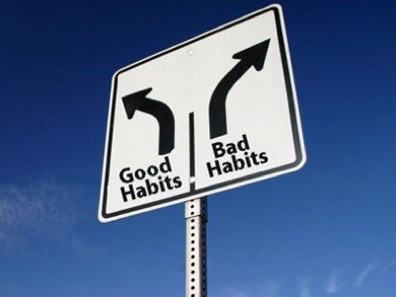
It’s amazing how big a difference a little thing can make. Starting your day mindfully with some tea, for example, can change your entire day. Clearing your desk will make your work day amazing. A smile from a loved one can mean the world.
And when these little things are repeated daily, and formed into habits, their benefits increase not just by multiples but by exponents.
The little habits can be life-changing.
Everyone’s world-changing little habits will be different, but I’ll share a few of mine, and then some tips for forming them.
My Little Habits
I have lots of little habits, but these are a handful of my favorites:
1. Get-in-the-door ritual. Whenever I get home, the first thing I do is put my stuff away. I have a designated spot for my keys, cash/cards (I don’t use a wallet), phone, and coins. Everything else either gets tossed or put wherever it belongs. If we brought something home like groceries or library books, those get put away, right away. This is an important little ritual because even people who have simplified their homes notice that possessions and junk can build up over time — and that starts with what you bring in. It’s no use simplifying and organizing if it just gets cluttered and disorganized every time you come home.
2. Put clothes away. It’s so simple, but when I take clothes off, they either go in the hamper or I fold them & put them in my drawer or hang them in the closet. Others drape them over chairs or throw them on the floor or bed, and sorting through them later becomes a major chore. By doing it right away, things stay organized and I don’t have to worry about cleaning up later.
3. Wash my bowl. When I finish eating, I wash my dishes by hand, mindfully. No mess to clean up later. Read more.
4. Prepare meals in advance. This is important when I’m trying to stick to an eating plan. Cooking your own meals is the healthiest (and most frugal) choice, but if you have to cook three to six times a day, it’ll get too cumbersome and you’re likely to give up. So I prepare my food in bulk (for 3-6 days in advance), and eat the same meals all week. It’s no harder than cooking smaller meals. I only make food that I adore, so I don’t get bored. It’s super easy to stay on a meal plan this way.
5. Just step out the door. My motto for exercise. Most people have a hard time with motivation to do workouts, but not me. First of all, I only do workouts I love, so I actually look forward to them. But second, I never think about how I don’t feel like doing a workout — because I tell myself that all I have to do is get on my shoes and get out the door. The rest flows naturally.
6. Clear distractions. When I’m ready to do a task, I clear all distractions. Small action, huge difference.
7. Take a walk & reflect. Taking a short walk is such a simple thing to do — you can do it during your lunch break, or take a break when you’ve been working for a couple hours straight. It only needs to be 10-20 minutes. But oh boy, what a world of difference. Not only does the walk relieve stress and clear your head, it gives you an opportunity to reflect on what you’ve been doing, and reflection is one of the most important tools for changing your life.
8. Breathe. When I get stressed, I simply breathe.
How to Form Them
I’ve written about habits numerous times before, but here’s an easy guide to forming a little habit:
§ Do one habit at a time.
§ Make it easy to do.
§ Do it consciously, very consciously at first.
§ Don’t allow any exceptions.
§ Post your progress publicly.
§ Keep doing it, every single day.
§ Enjoy the habit.
Forming a habit can be easy, if you enjoy it, take it slowly, and do it mindfully.
Train Blog – Once again, the birds are singing, it’s not raining so it’s a good day to ride the train. NOT!! I can take the smell of “Weed deFleur”, over powering perfume/cologne but I cannot take the smell of “no bath in a month” smell. I am on a train with the heat on!! How can I focus on reading my good book?!?! How I say? I had to cover my nose with my jacket the whole 15 min ride. Homey did not get off before me so I suffered the pain, the agony, the holding the breath!! Other people moved to a different seat but this morning I have the woozy so moving on a moving train would not be a pretty site (hehehehehe) When I got off, I exhaled and inhaled the sweet morning air. Note to self – bring gas mask on train next time. lol lol lol lol Good Morning Y’all!!
I wanted a bit of smile to assist me in setting a tone for the day and week ahead… the following short bit did it for me.
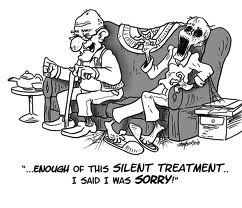
A man and his wife were having some problems at home and were giving each other the silent treatment. The next week, the man realized that he would need his wife to wake him at 5:00 AM for an early morning business flight to Chicago. Not wanting to be the first to break the silence (AND LOSE), he wrote on a piece of paper, “Please wake me at 5:00 AM.
The next morning the man woke up, only to discover it was 9:00 AM and that he had missed his flight. Furious, he was about to go and see why his wife hadn’t woken him when he noticed a piece of paper by the bed.
The paper said, “It is 5:00 AM. Wake up.” (MEN JUST AREN’T EQUIPPED FOR THESE SORT OF CONTESTS)
The “silent treatment” takes many forms in the corporate world and the resulting casualties are always trust, relationships and ultimately culture. I’ve had more clients in the last 6 months, than the previous 9 years, use the term “passive aggressive” in their attempts to describe what is plaguing their workplace. E-mail is often the favored weapon of the passive aggressive culture. Tactics include withholding needed details, CC-ing everyone in the chain of command – especially when a “point is being made”. Not replying promptly or replying late at night to “let them know” you are working late…can also contribute to negative feelings in the workplace. (I love Tim Sanders 12 rules for E-mails … great video on his Rule # 3 click here)
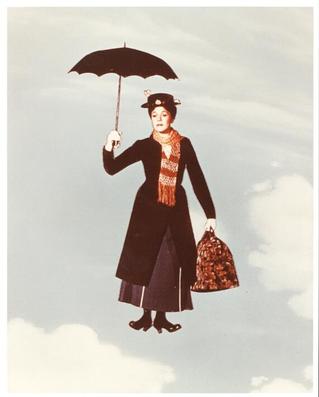
With all this potentially going on in the world of work… we must be more deliberate, decided and determined than ever before that we will not reciprocate or participate . We will not be pulled into the petty by acting pious or pitiful. We will rise above such things and model the behaviors more apt to be seen in Mary Poppins than in episodes of “The Office”. And I don’t mean the Banker guy, at least until the end of the Movie, where he takes his family(home team), to the park to “Go Fly a Kite”)
In fact.. wouldn’t it be wonderful if the next office culture building event ..was a Kite Flying Contest? If any of you do… please send me pictures. I don’t think I have flown a kite in at least 15 years.
When we get out of ICU and Home… we are going to go FLY A KITE!
An infant’s smile or a child’s laugh is magical. Receiving a smile from an infant or child elicits an automatic smile from any adult. Parents, grandparents and adults alike will perform varying degrees of happy face antics in the hope of getting a baby to smile. Medical studies have determined that laughing is both contagious and healthy.
I it’s most demure mode, laughing will manifest itself visually as a smile maybe coupled with some wide eye contact. At the other extreme end of the laughing scale, you will realize Visual, Kinesthetic, and Auditory displays – leg slapping, belly shaking, body contorting laughter! Just thinking about this ‘Laugh Attack’ brings a smile to your face. Remembering or thinking about laughter itself physically and mentally emotes all the positive effects of actually laughing.
The beautiful thing about laughter is that it is contagious. It matters not whether you initiate laughing or it comes from some other source, the health benefits of laughing have been studied and documented.
Laughter is the BEST MEDICINE!
Yet, laughter is still one of the least understood of human behaviors and one that is just now a serious study by scientists. Science has been able to determine three parts of the brain are activated during a good laugh:
1) a thinking or cognitive area for understanding the joke,
2) a movement or kinesthetic part for initiating muscle movement, and
3) an emotional region that derives the “giddy” feeling. Why do people laugh at jokes delivered while others laugh at incongruities like pain inflicted or a threatening situations? Is laughter a signal indicating a action is meant “in fun”? These things are still being studied.
Laughter makes us (and others) feel better.
Studies have identified a number of areas, where applying laughter, will be a positive and healthy experience. Feel better by laughing:
1) Health and laughing
A) lifts up your mood
B) is contagious and positive
C) is stress reducing
D) has proven long term connections to improved mental health
2) Learning and laughter has shown that
A) levity as a teaching style reduces fear and anxiety and opens students up to learning and absorbing
B) well-planned, appropriate, contextual humor can help students ingrain information
3) Relationships and laughing
A) help create a social lubricant that, in groups, encourages cooperation and altruistic behavior
B) is believed to be one of the earliest forms of communication; especially, emotional communication. Laughter could have preceded the spoken word and bonded groups in pre-historic society.
“By the time a child reaches nursery school, he or she will laugh about 300 times a day. Adults laugh an average of 17 times a day.” “Science of Laughter” Discovery Health
Clearly as adults we do not laugh enough. Here are ten ideas to improve and increase laughter [and fun] in your life:
1) Receive, Share and Tell Jokes – email is awesome for this and so are social gatherings. Telling jokes (and learning what jokes are appropriate) will prove to improve your social and public speaking skills.
2) Share humorous personal stories – stories about yourself will allow you to laugh at yourself. Laughing at yourself is a great way to express and learn from our mistakes and little foibles.
3) With your family and friends play group games that require group interaction (Parlour Games) – old standards and board games (like Charades, Pictionary, Balderdash, Cranium, Trivial Pursuit, Humzinger) or more organized themed events like a Murder Mystery Night. Excellent for a varied group of age and shyness. These are just FUN! Play like children!
4) Laugh out loud – not just a chuckle, a deep laugh that works the lungs and belly (maybe even brings tears to your eyes). Laughing equals Happy and Happy equals Healthy!
5) Karoke or new video games like Guitar Hero – whether at home or at a public event, singing and music are excellent and fun group situations that will help create fun and laughter!
6) Meet your group at a favorite pub or watering hole – conversation and stories will naturally make you laugh. Have fun!
7) Play Kids’ Games – nothing allow you to play like a child than playing with your children or grandchildren. And nothing is more liberating than laughing with children!
8) Learn with friends – experience learning a new language or go to dance class with other people or couples. Laughing will open you up to a better learning experience.
9) Host a Party (maybe with a Fun Theme (item 3) – a casual informal gathering (BYOB, BBQ, Campfire or Dinner Party) will always give people an opportunity to meet and share. Invite fun people and you will create a fun and memorable event.
10) Do something you have never done before – with other people or friends, step out and do something new (community fair, site seeing, small airplane ride, hot air balloon, casino, a day at the track, snowmobiling, skiing). With a group you have both the benefit of increased support and protection. Have fun!
Fun and Laughter is best in a social group setting.
Do Not attempt Laughter alone. It is best served with friends.











 Mzsunflower's Say What?